
1. How Embryo Forms?
Mainly 3 elements are required to form an Embryo.
- Sperms
- Ova
- Fertilization
This process takes place in Fallopian tube. It produces Embryo, by fertilization of Sperm & Ova. Embryo starts to move in Uterine Cavity and settles there (In Uterine Cavity) by 3rd day of Fertilization. It will be nurtured there for 9 months and a full grown baby is delivered in the end.
2. What is infertility?
Infertility means inability of the couple to achieve pregnancy after 12 months or more of regular unprotected sexual intercourse. In general terms, 85% to 88% Healthy Couples have babies in the first year of their marriage, which means 12% to 15% of couples has to face infertility problem.
3. Is it sufficient to examine only the wife to have a child?
No. For conception, it is necessary to evaluate both the woman and the man.
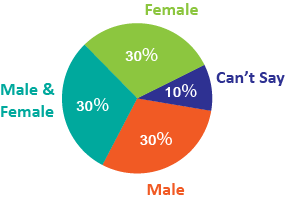
Causes of infertility:
- Woman – 30%
- Man – 30%
- Both (woman and man) – 30%
- Can’t say – 10%
4. Natural causes behind the increasing rate of infertility:
- Increasing level of Stress
- Increasing percentage of STD (Sexually Transmitted Diseases)
- Increasing Age of Marriage (Delayed Marriages)
- Deliberate Prolonging of pregnancy for Education, Job or various family responsibilities.
- Abnormal Changes in Lifestyle.
5. Various Social reasons for Infertility:
Female Infertility:
- Irregular Menstrual Cycle in female because of defective follicle formation or defective rupture of follicle. (Anovulation)
- Fallopian Tube Blockage
- Intrauterine septum or uterine cavity adhesions. (congenital or acquired)
- Pelvic inflammatory disease (PID).
- Fibroids in Uterus.
- Endometriosis.
- Hormonal Imbalance
- Increase in Age
Male Infertility:
- Low sperm count or motility or both.
- Absent sperms. (Azoospermia)
- Erectile dysfunction
- Premature ejaculation.
- Absence of Ejaculation or retrograde ejaculation
- Antispem antibodies
6. What is the fertile period in the menstrual cycle?
In women with a regular menstrual cycle, ovulation usually occurs between the 12th and 16th day of the cycle. The lifespan of the ovum (egg) is about 24 hours, while sperm can survive for approximately 48 hours. Therefore, for conception, it is important for the couple to have intercourse daily or on alternate days between the 12th and 18th day of the menstrual cycle.
7. General Diagnosis & Treatment
Semen Test:
It is the single most important test to evaluate male factor in infertility.
Ovulation induction is started for Day 2-3 of menstrual cycle and follicular growth is monitored from day 8 on daily or alternate day basis. Once a dominant follicle is reached to the size of 18-20 mm HCG injection is given. Ovulation occurs after 36-48 hours after HCG injection. The couple is asked to have intercourse on the probable days of ovulation. After confirming ovulation progesterone tables are prescribed to support probably developing embryo. Only 3-4 visits in a month are required, for this complete treatment. Normally, this Treatment has to be followed for 3-6 months.60-70 % couple conceives after this treatment alone. The remaining needs further evaluation and treatment.
Special Diagnosis Treatment
Hysterosalpingography (HSG) or Hystero-laperoscopy examination of Wife is required for those who are not benefitted from General Treatment, to test tubal patency. If the fallopian tube is blocked, we try to open it by laparoscopy or hysteroscopy. Success rate is round 60%-70%.
We can do IUI Treatment, if the tubes are patent. If the fallopian tube cannot be opened, Test Tube Baby (IVF- ICSI) treatment is advised for favourable results.
8. What is IUI? (Intrauterine Insemination)
IUI refers to intrauterine insemination. This procedure involves giving the woman certain tablets (Ovulation Induction) and injections (HMG) to stimulate the proper growth of her eggs. At the time of ovulation (when the egg is released), the semen is washed (purified) and released directly into the uterus using a syringe (IUI Cannula). This entire process is called IUI.
Before starting this treatment, certain tests are necessary:
- Sonography of the woman's uterus and ovaries (Follicular Study).
- Examination of the fallopian tubes using a telescope (Laparoscopy / Hysteroscopy) or X-ray (HSG) method.
- Semen analysis of the man.
Important: IUI can only be performed if the fallopian tubes are functional.
9. Who is IUI for?
- Low sperm motility, low sperm count, or a combination of both low count and low motility.
- Failure to conceive even after 3 to 6 months of taking medication (Ovulation Induction & Follicular Study).
- Unexplained infertility: Inability to conceive despite there being no apparent obstacles or medical issues.
- Advancing age of the woman.
- Endometriosis.
- Cervical disorders (disorders of the opening of the uterus).
10. What is the process of IUI? (Intrauterine Insemination)
On the second or third day of the menstrual cycle, a sonography (baseline scan) is performed to ensure the environment is suitable for pregnancy, and then the growth of the egg in the ovary is stimulated (Controlled Super Ovulation) using tablets (Ovulation induction), injections (HMG), or solely through injections (HMG). Along with this medication, the growth of the egg is monitored via sonography starting from the 8th day of the cycle. Sonography helps determine whether the egg is growing at the expected rate and also provides an estimate of when the egg will be released from the ovary. Once the follicle in the ovary is mature, an HCG injection is administered. Between 24 to 48 hours after the egg is released, the washed semen is released directly into the uterus using an IUI Cannula. After the IUI, certain tablets (Progesterone) are given to support the development of the embryo. If a period is missed, a urine test can be done 2 to 3 days later to check whether pregnancy has occurred. It is generally advised to abstain from intercourse for about 1 day prior to the IUI. The success rate of this method per month is 18 to 20%. This procedure can be done 3 to 6 times. With this, approximately 60 to 70% of couples can conceive within 3 to 6 months.
11. On the day of the IUI
Upon arriving at the clinic at the pre-scheduled time, a container is provided by the clinic for the collection of the male's semen. Semen must be collected strictly in the container provided by the clinic. Half an hour after the semen is collected, a washing (purification) process is performed on it. Through this process, high-quality sperm can be obtained in maximum numbers. Once the sperm sample is prepared, it is used for the IUI procedure. It takes approximately 1 to 2 hours to prepare this sample.
12. Is hospitalization required for IUI?
Admission to the hospital is not required for IUI. The preparation for the IUI procedure generally takes about 2 to 3 hours, and it is necessary to rest for 30 to 45 minutes after the IUI.
13. Are there any restrictions after IUI?
There is no need to make any changes to your daily routine after an IUI. Travel is not prohibited, and there are no dietary restrictions. You can resume marital relations (intercourse) as desired.
14. What next after IUI?
If the IUI procedure is not successful, it is advisable for such couples to opt for Test Tube Baby (IVF / ICSI) treatment.
15. What is IVF-ET?
Fertilizing the male sperm and female egg (Ova) outside the uterus and placing the resulting embryo into the uterus on the third day is called IVF.
16. Who is IVF-ET for?
- Low sperm count, low sperm motility, or both low count and low motility.
- Disorders of the fallopian tubes / blocked fallopian tubes.
- Endometriosis.
- Cervical disorders.
- Unexplained: Inability to conceive despite trying, with no apparent obstacles seen.
- Recurrent miscarriages.
17. IVF Procedure
Through injections, the proper growth of the egg in the ovary is stimulated. During this, more than one follicle is developed. With the help of sonography, these eggs are retrieved. They are then fertilized. The resulting embryo is then placed into the uterus on the third or fifth day. There (in the uterus), it implants and is nourished for 9 months, leading to the birth of a fully developed baby. The success rate of this method per month is 20-30%. This procedure can be done 3 to 6 times.
18. What is ICSI?
This is an in-vitro (outside the uterus) fertilization procedure in which a single, good-quality sperm is selected and injected directly into the egg. It then fertilizes to form an embryo.
19. Who is ICSI for?
Basically, this procedure is to overcome male infertility.
- Absence of sperm (Azoospermia).
- Low sperm count (Oligospermia).
- Sperm motility disorder (Asthenospermia).
- Absence of the vas deferens (ejaculatory ducts).
- Antisperm Antibodies.
- Advancing age of the woman...
20. ICSI Procedure?
Similar to IVF, the proper growth of the eggs in the ovaries is stimulated through injections. In this, more than one follicle is developed. Then, with the help of sonography, these eggs are retrieved. A single sperm is injected into each mature egg to fertilize it and create an embryo. This prepared embryo is then grown outside the body for 2 days and is placed in the uterus on the third day.
What lifestyle changes should be made for any treatment?
- Avoid alcohol and smoking.
- Exercise regularly.
- Eat a balanced diet.
- Maintain regular physical (sexual) relations.
- Important Instructions
- There has been a tremendous revolution in the medical field today. We can overcome infertility through various new treatment methods. Couples should maintain a positive attitude and consult with expert doctors. Make lifestyle changes according to the doctor's advice.
- Patience is extremely necessary during infertility treatment. Stopping the treatment without understanding it is wrong. If the required time and expenses are understood at the beginning, there will be less anxiety. If you have any doubts during the treatment, speak with your doctors and get your doubts clarified.